
7 Ways to Reduce Dental Patient No Shows
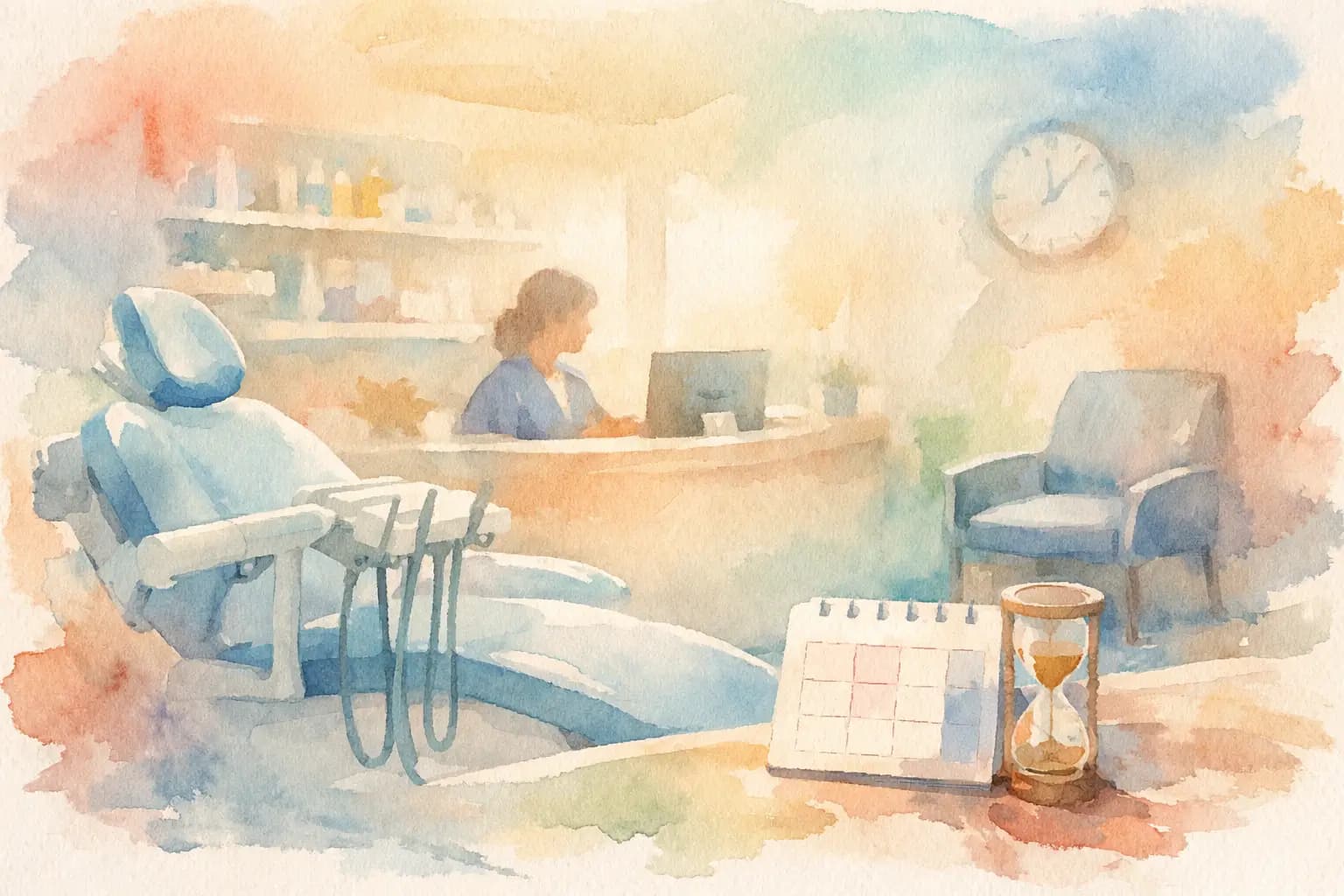
An empty chair is not simply a scheduling inconvenience. It is lost production, a disrupted provider schedule, and often a front-desk scramble to reach patients who may already be at work, driving, or unable to answer. To reduce dental patient no shows, practices need to address the full booking experience, not just send another reminder the day before.
Most missed visits are predictable. Patients forget appointments booked weeks ago, hesitate because of cost, cannot find childcare, feel anxious about treatment, or never fully committed when they submitted an inquiry. The strongest no-show strategy makes it easier to book, easier to confirm, and easier to reschedule before a chair goes unused.
1. Make the appointment feel real at the moment of booking
A vague lead is not an appointment. If a patient fills out a form and expects a callback later, there is time for uncertainty to grow. A confirmed date, time, location, provider type, and clear next step create a stronger commitment than a message saying someone will be in touch.
Offer real-time availability whenever possible. Patients are more likely to keep an appointment they selected themselves because it fits their schedule. For phone bookings, train staff to repeat the details, ask whether the time works around work or school obligations, and explain exactly what will happen at the first visit.
The confirmation message should answer practical questions before the patient has to ask: Where do I park? What should I bring? How early should I arrive? Will insurance be checked before treatment? First-visit uncertainty can turn into a quiet cancellation if the patient cannot get a quick answer.
2. Reduce dental patient no shows with a reminder sequence
One reminder is better than none, but a single generic message is rarely enough for appointments booked far in advance. Use a short sequence that gives patients enough notice to act without making communication feel repetitive.
A practical cadence is a confirmation immediately after booking, a reminder about one week before the visit, another two to three days before, and a final reminder the day before. The exact timing depends on your patient base. A family practice may need earlier reminders because parents are coordinating school, transportation, and work. An emergency-focused practice may need fewer reminders but faster follow-up.
Use the channel patients prefer. Text messages tend to work well for quick confirmations, while email can carry forms, preparation details, and financial information. Calls still matter for high-value procedures, patients with a prior no-show history, and appointments that require more preparation.
Every reminder should include a simple action: confirm, reschedule, or call the office. A patient who cannot attend is not necessarily lost. They become a true no-show when the practice learns too late to recover the slot.
3. Ask for a clear confirmation, not passive acknowledgment
A reminder that says “We look forward to seeing you” can be ignored without consequence. A reminder that asks the patient to reply YES, click to confirm, or choose a new time creates a useful signal for your team.
Build a daily confirmation workflow around unanswered messages. Do not wait until the appointment is already at risk. If a patient has not confirmed 48 hours before a longer procedure or new-patient visit, assign a staff member to call with a helpful, direct message: “We are holding this time for you. Does it still work, or would another opening be easier?”
The goal is not to pressure people. It is to identify uncertainty early enough to protect the schedule. Patients often appreciate the option to change plans without feeling embarrassed about calling.
4. Remove the cost and anxiety questions that cause silent cancellations
Patients do not always say why they are avoiding an appointment. A new patient may worry about an unexpected bill. Someone overdue for care may be anxious about being judged. A parent may be unsure whether a child needs a long appointment or a simple checkup.
Your pre-visit communication should make the first step feel manageable. Explain whether the visit includes an exam, cleaning, X-rays, consultation, or treatment planning. Give a straightforward overview of payment, insurance verification, financing options, and any new-patient offers that apply. Avoid promising an exact out-of-pocket amount before clinical assessment, but do not leave the patient guessing either.
For patients expressing dental anxiety, a short reassurance can make a measurable difference: the team will explain each step, the patient can ask questions, and the first visit is designed to understand their needs. Trust is operational. When patients feel informed, they are more likely to arrive.
5. Segment patients instead of treating every appointment the same
A hygiene recall, a new-patient exam, a pediatric visit, and a multi-hour treatment appointment do not carry the same no-show risk. Your outreach should reflect the value of the chair time and the reasons a patient might miss it.
Start by reviewing six to 12 months of scheduling data. Look for patterns by appointment type, booking source, day of week, time of day, lead time, provider, and patient status. You may find that Monday mornings have a higher cancellation rate, that appointments booked more than 30 days ahead need an extra confirmation, or that new patients from manual web forms need faster follow-up.
Track at least these four measures:
- No-show rate by appointment type and location
- Late-cancellation rate and how much notice patients provide
- Confirmation rate before the 48-hour mark
- Rebook rate for cancelled and missed appointments
These numbers help you fix the right problem. If confirmations are low, improve reminders. If confirmed patients still do not arrive, review directions, insurance friction, wait times, and how clearly the visit was explained.
6. Make rescheduling easier than disappearing
A strict cancellation policy can protect valuable provider time, but it can also discourage patients from contacting the office. The policy should be clear, consistently applied, and paired with an easy way to reschedule.
Give patients a direct phone number, text reply option, or online path to request a new time. If they cancel with reasonable notice, offer the next available opening before ending the conversation. For patients who miss an appointment, follow up the same day with a supportive message instead of a generic penalty notice. The first objective is to get care back on the calendar.
For repeat no-shows, a different process may be appropriate. Practices may require a deposit, limit high-demand time slots, or use a short-notice scheduling list. Apply those steps thoughtfully. A blanket policy can unintentionally create barriers for patients with real transportation, work, or caregiving constraints.
7. Build a fast-fill list for openings that still occur
Even excellent systems will not eliminate every cancellation. The operational win comes from filling newly open time before it becomes lost production.
Maintain an opt-in list of patients who want earlier appointments, including those waiting for hygiene, treatment, urgent care, or a new-patient consultation. When a slot opens, send a targeted message with the exact time and a one-click way to claim it. A broad blast to every patient can create confusion and extra calls. Targeting by provider, treatment need, location, and preferred availability is more effective.
This is where online booking can carry real weight. A platform such as BookMySmile can help clinics present available appointments to patients actively seeking care, while automated reminders and confirmation workflows reduce manual follow-up. The right channel should be measured by completed visits, not just leads or clicks.
Give the front desk a simple playbook
No-show reduction fails when it lives only in software settings. Your team needs shared rules for what happens after a booking, an unanswered confirmation, a cancellation, and a missed appointment. Keep the process simple enough to use during a busy day.
Review results weekly for the first month after changes are made. Celebrate fewer empty chairs, but also watch for unintended effects such as more patient complaints, slower booking, or excessive staff time spent chasing confirmations. The best workflow balances patient convenience with schedule protection.
A patient who reschedules early has still given your practice an opportunity. Make that action quick, respectful, and easy, and your schedule becomes more reliable one appointment at a time.